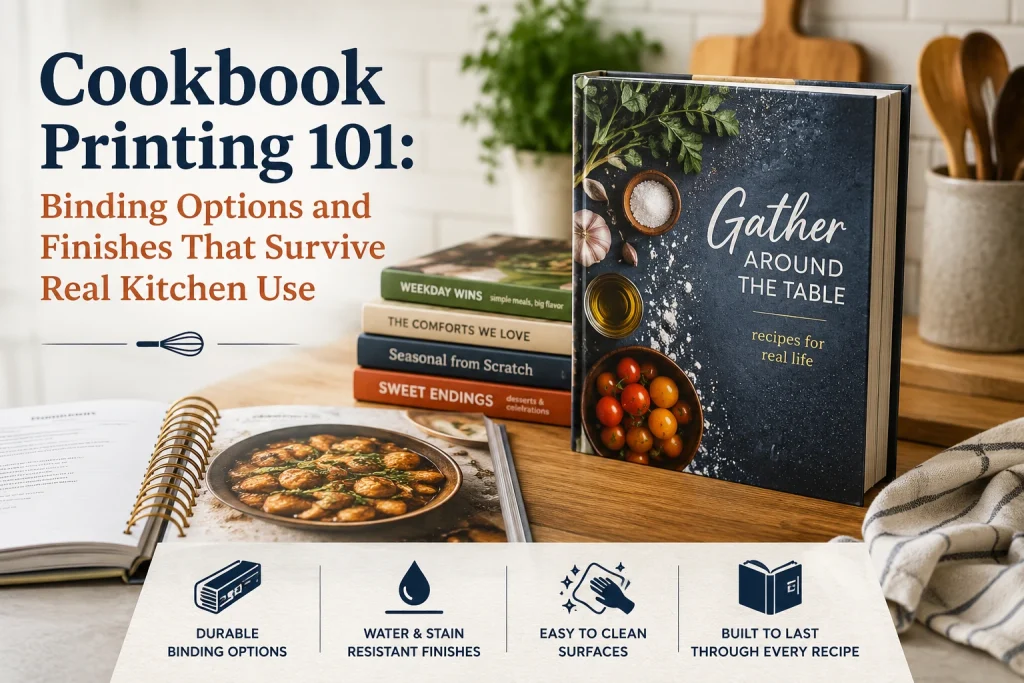
Cookbook printing requires binding that lays flat without hands holding pages open and finishes that resist moisture, grease, and repeated handling in active kitchen environments. The three binding methods that deliver true lay-flat functionality for cookbook printing are Wire-O binding, spiral binding, and Smyth sewn case binding—each with distinct advantages depending on your cookbook’s size, audience, and positioning. Cover lamination and interior coating choices determine whether your cookbook survives years of kitchen use or deteriorates after a few messy cooking sessions.
Standard book binding fails in kitchens. Perfect-bound cookbooks snap shut the moment you release them. Readers prop them open with cans, rubber bands, or heavy utensils—damaging spines and pages while struggling to follow recipes. Uncoated pages absorb splashes and stains, becoming illegible and unsanitary. These failures aren’t inevitable; they result from using general book construction in an environment with specific demands.
This guide covers every binding option and finish choice relevant to cookbook printing, explaining which combinations work for different cookbook types and use cases. With over 30 years of combined experience helping cookbook authors, culinary schools, and food publishers nationwide—including partnerships with 570+ culinary schools—the PRC Book Printing team understands what makes cookbooks succeed in real kitchens.
What You’ll Learn
- Why Standard Book Binding Fails in Kitchens
- The Real Causes Behind Cookbook Durability Problems
- Binding Options for Cookbook Printing: Complete Guide
- Finishes and Coatings That Protect Cookbooks
- Choosing the Right Combination for Your Cookbook
- Expert Tips from PRC Book Printing
- Frequently Asked Questions
- Next Steps: Print a Cookbook Built for Kitchens
Why Standard Book Binding Fails in Kitchens
Cookbooks face challenges no other book category encounters. They’re used in environments full of moisture, heat, grease, and sticky substances. They’re consulted mid-task with wet or flour-covered hands. They need to stay open, hands-free, while the cook works.
Common cookbook failures include:
- Books snapping shut repeatedly during use
- Spines cracking or breaking from forced flat opening
- Pages sticking together from absorbed moisture or grease
- Covers warping from humidity and temperature changes
- Stains becoming permanent and spreading
- Binding failing completely after limited use
- Pages becoming wavy or distorted from liquid exposure
These problems frustrate home cooks and embarrass cookbook authors. A beautifully photographed, carefully written cookbook becomes unusable if it won’t stay open or falls apart after a few uses.
The kitchen environment demands:
- Lay-flat functionality without assistance
- Moisture and grease resistance
- Wipeable surfaces
- Durable construction for repeated use
- Resistance to heat and humidity fluctuations
Standard book construction optimizes for reading comfort, shelf presence, and cost—not kitchen survival. Cookbook printing requires different priorities.
The Real Causes Behind Cookbook Durability Problems
Understanding why cookbooks fail helps you make better production decisions.
Cause #1: Perfect Binding Doesn’t Lay Flat
Perfect binding—adhesive applied to the spine edge of trimmed pages—dominates commercial book publishing because it’s cost-effective and creates clean, professional spines. But perfect-bound books don’t open flat. The adhesive spine resists separation, pulling pages back toward closed position.
Cookbook users fight this constantly. They crack spines trying to force books flat, damaging binding and eventually causing pages to release. They use improvised weights—cans, jars, cutting boards—that obscure recipe text and risk spilling onto pages. The reading experience becomes frustrating rather than enjoyable.
Cause #2: Uncoated Paper Absorbs Everything
Standard book paper is designed to accept ink, not repel liquids. When cooking splashes reach uncoated pages, they absorb instantly, creating permanent stains that spread and can’t be wiped clean. Over time, frequently used pages become discolored, stuck together, and eventually illegible.
Paper that absorbs moisture also warps. Pages near stained areas buckle and wave, compromising the book’s appearance and making pages harder to turn.
Cause #3: Inadequate Cover Protection
Book covers without appropriate lamination or coating absorb moisture and grease just like interior pages. Printed cover images degrade. Fingerprints accumulate. Grease spots become permanent fixtures. The beautiful food photography that sold the cookbook becomes a reminder of every messy cooking session.
Additionally, standard lamination can peel when exposed to heat and humidity fluctuations common in kitchens. Steam from cooking loosens adhesive over time, creating bubbles and eventual separation.
Cause #4: Ignoring Kitchen Environment Realities
Cookbook publishers sometimes prioritize aesthetics over functionality, choosing binding and finishes that look elegant but fail practically. A beautiful cloth-covered hardback cookbook may impress on the shelf but becomes a liability on the counter. Uncoated matte paper may feel premium but can’t survive a splash of tomato sauce.
Cause #5: Cost-Driven Compromises
Budget constraints push publishers toward cheaper binding and finishing options that work adequately for novels or gift books but fail for cookbooks. The savings at printing evaporate when readers complain about unusable books, demand replacements, or leave negative reviews citing poor functionality.
Binding Options for Cookbook Printing: Complete Guide
Each binding method offers different advantages for cookbook use. Here’s what you need to know.
Wire-O Binding (Twin Loop Wire)
What It Is: Metal wire loops inserted through punched holes along the spine edge, allowing pages to rotate 360° around the wire.
Lay-Flat Performance: Excellent. Wire-O bound books lay completely flat with no tension pulling pages closed. They can also fold back on themselves, reducing counter space requirements.
Kitchen Suitability:
- Perfect lay-flat functionality
- Folds completely back for compact use
- Durable wire resists kitchen conditions
- Pages turn easily even with damp hands
- ⚠️ Wire can snag on other items
- ⚠️ No printable spine for shelf identification
- ⚠️ Wire adds slight bulk
Best For:
- Working kitchen cookbooks prioritizing functionality
- Culinary school and professional training materials
- Spiral-style presentation with more polished appearance
- Cookbooks that will live on counters rather than shelves
Visual Presentation: Professional and functional rather than premium gift-book aesthetic. Wire colors (black, white, silver, or custom) can complement cover design.
Spiral Binding (Plastic Coil)
What It Is: Continuous plastic coil wound through punched holes along the spine edge.
Lay-Flat Performance: Excellent. Similar to Wire-O, spiral bound books lay completely flat and fold back on themselves.
Kitchen Suitability:
- Perfect lay-flat functionality
- Folds completely back for minimal footprint
- Coil is smooth (no snagging like wire)
- Pages turn easily
- More flexible coil tolerates rough handling
- ⚠️ No printable spine
- ⚠️ Less premium appearance than Wire-O or hardcover
Best For:
- Community cookbooks and fundraiser projects
- Personal recipe collections
- Budget-conscious projects prioritizing function
- Cookbooks for heavy daily use
Visual Presentation: Casual and approachable. Coil colors can match or complement cover design.
Smyth Sewn Hardcover
What It Is: Page signatures stitched with thread, then bound into rigid hardcover case.
Lay-Flat Performance: Very good. Smyth sewn binding allows books to open flat without spine stress—not as completely as Wire-O, but dramatically better than perfect binding.
Kitchen Suitability:
- Opens flat enough for hands-free use
- Premium gift-book presentation
- Printable spine for shelf identification
- Superior long-term durability
- Professional, bookstore-quality appearance
- ⚠️ Hardcover more susceptible to moisture damage if unprotected
- ⚠️ Higher cost than spiral/Wire-O options
Best For:
- Gift-quality cookbooks with premium positioning
- Coffee table cookbooks meant for display and occasional use
- Cookbooks from established chefs or publishers
- Heirloom family recipe books
Visual Presentation: Premium and professional. The binding method of choice for bookstore-quality cookbooks.
Concealed Wire-O (Hidden Wire)
What It Is: Wire-O binding concealed within a wraparound cover, creating a squared spine appearance.
Lay-Flat Performance: Excellent—same as standard Wire-O.
Kitchen Suitability:
- Perfect lay-flat functionality
- Printable spine for shelf identification
- Cleaner appearance than exposed wire
- Wire protected from snagging
- ⚠️ Higher cost than standard Wire-O
- ⚠️ More complex production
Best For:
- Cookbooks needing both lay-flat function and bookshelf presence
- Professional chef cookbooks balancing utility and aesthetics
- Culinary publishers wanting functional premium products
Visual Presentation: Clean, professional appearance with the functionality of wire binding.
Lay-Flat Perfect Binding (Otabind/Repkover)
What It Is: Modified perfect binding techniques that allow books to open flat by attaching pages to a flexible spine piece rather than directly to the cover spine.
Lay-Flat Performance: Good to very good—better than standard perfect binding, though not quite as flat as Wire-O or Smyth sewn.
Kitchen Suitability:
- Significantly better lay-flat than standard perfect binding
- Traditional book appearance
- Printable spine
- Lower cost than Smyth sewn hardcover
- ⚠️ Still some page tension compared to Wire-O
- ⚠️ Less durable than sewn binding over time
Best For:
- Cookbooks needing traditional book appearance at moderate cost
- Softcover cookbooks with improved functionality
- Higher-volume cookbook printing where sewn binding isn’t feasible
Visual Presentation: Traditional paperback appearance with enhanced functionality.
Finishes and Coatings That Protect Cookbooks
Binding gets cookbooks to lay flat. Finishes keep them usable after kitchen exposure.
Cover Lamination Options
Gloss Lamination:
- High shine, vibrant color reproduction
- Good moisture resistance
- Shows fingerprints and smudges readily
- Can feel slippery when wet
- Best for: Cookbooks prioritizing photography impact over handling
Matte Lamination:
- Sophisticated, elegant appearance
- Good moisture resistance
- Hides fingerprints better than gloss
- Slight texture improves grip
- Best for: Premium cookbooks balancing aesthetics and practicality
Soft-Touch Lamination:
- Velvety, luxurious feel
- Excellent fingerprint resistance
- Good moisture resistance when wiped quickly
- Premium tactile experience
- Best for: Gift-quality cookbooks, premium chef publications
Scuff-Resistant Lamination:
- Enhanced durability against scratches and wear
- Good for high-use environments
- Maintains appearance longer
- Best for: Culinary school materials, heavily used kitchen references
Interior Paper Coatings
Aqueous Coating:
- Water-based protective coating
- Provides moisture resistance for brief exposure
- Allows wiping of fresh spills
- Doesn’t completely waterproof pages
- Best for: General cookbook protection in home kitchens
UV Coating:
- Cured with ultraviolet light
- Higher gloss and protection than aqueous
- More resistant to moisture penetration
- Best for: Cookbooks expecting frequent exposure
Synthetic/Waterproof Paper:
- Plastic-based paper that’s fully waterproof
- Can be completely submerged and wiped clean
- Higher cost than standard paper
- Different feel than traditional paper
- Best for: Professional kitchen environments, outdoor grilling cookbooks
Interior Paper Selection
Coated Paper (Matte or Gloss):
- Excellent food photography reproduction
- Some inherent moisture resistance
- Slightly slippery when wet
- Best for: Photo-heavy cookbooks where image quality is paramount
Coated Paper with Aqueous Finish:
- Photo quality plus added protection
- Better moisture resistance than uncoated alternatives
- Wipeable surface for fresh spills
- Best for: Most cookbook applications
Heavy-Weight Paper Stock:
- More substantial feel
- Greater durability for page turning
- Better resistance to warping
- Best for: Cookbooks intended for heavy use
Choosing the Right Combination for Your Cookbook
Different cookbooks have different needs. Here’s how to match specifications to use cases.
For Professional Kitchen/Culinary School Use
Binding: Wire-O or spiral Cover: Heavy laminated cardstock with scuff-resistant finish Interior: Coated paper with aqueous coating, heavier weight Why: Maximum functionality, wipeable surfaces, durability over hundreds of uses. PRC Book Printing partners with 570+ culinary schools nationwide, saving them approximately 30% on cookbook production costs with these specifications.
For Gift-Quality Coffee Table Cookbooks
Binding: Smyth sewn hardcover Cover: Printed hardcover with matte or soft-touch lamination Interior: Premium coated paper with aqueous finish Why: Premium presentation for display and occasional cooking use. Smyth sewn binding provides lay-flat functionality without sacrificing bookstore-quality appearance.
For Self-Published/Independent Chef Cookbooks
Binding: Wire-O, concealed Wire-O, or Smyth sewn (depending on positioning) Cover: Laminated with matte or soft-touch finish Interior: Coated paper with aqueous coating Why: Balance of functionality, durability, and professional appearance at accessible pricing.
For Community/Fundraiser Cookbooks
Binding: Spiral or Wire-O Cover: Laminated cardstock Interior: Coated paper Why: Cost-effective production with adequate kitchen durability for home use.
For Family Recipe Collections/Heirloom Books
Binding: Smyth sewn hardcover Cover: Cloth or leatherette with foil stamping Interior: Acid-free coated paper with aqueous finish Why: Archival quality for generational preservation plus practical kitchen functionality.
Expert Tips from PRC Book Printing
Our team has produced cookbooks for everyone from first-time family collectors to celebrity chefs to major culinary schools. Here’s what we’ve learned works best.
Test Your Binding Choice with a Physical Proof
Request a bound proof before committing to your full print run. Open it repeatedly. Lay it flat on a counter. Try turning pages with wet fingers. A binding that seems adequate in concept may reveal problems in actual use. Physical proofs are especially important for cookbooks because functionality is everything.
Don’t Underestimate Aqueous Coating Value
The modest cost of aqueous coating on interior pages pays dividends in cookbook longevity. Uncoated pages absorb the first splash permanently. Coated pages give users a chance to wipe spills before they set. For cookbooks used in actual kitchens, this coating is essential—not optional.
Consider Your Readers’ Kitchen Realities
Professional chefs need bulletproof durability—they’ll use your cookbook daily in chaotic commercial kitchens. Home cooks need reliable functionality with reasonable protection. Gift book recipients may cook from your book occasionally while displaying it prominently. Match your specifications to actual use patterns.
Lay-Flat Functionality Drives Reviews
Nothing generates negative cookbook reviews faster than “won’t stay open.” Readers expect cookbooks to lay flat. When they don’t, frustration transfers to the entire book—even if recipes are excellent. Investing in proper lay-flat binding protects your reputation and reader satisfaction.
Plan for Food Photography Quality
Cookbooks sell on visual appeal. Your binding and finish choices must support beautiful food photography reproduction. Heidelberg offset printing on coated paper delivers the color accuracy and vibrancy that makes food look appetizing. Don’t compromise photo quality to save on printing—it’s the foundation of cookbook appeal.
Frequently Asked Questions
What binding is best for cookbooks?
Wire-O and spiral binding provide the best lay-flat functionality, allowing cookbooks to open completely flat or fold back on themselves. Smyth sewn hardcover binding offers excellent lay-flat performance with premium presentation. Standard perfect binding is not recommended for cookbooks because it doesn’t lay flat reliably.
Why won’t my cookbook stay open?
Perfect-bound cookbooks resist opening flat because adhesive along the spine pulls pages toward a closed position. Switching to Wire-O, spiral, or Smyth sewn binding eliminates this problem. These binding methods allow pages to lay flat without tension.
What finish protects cookbooks from kitchen spills?
Laminated covers (matte, gloss, or soft-touch) protect covers from moisture and grease. Aqueous coating on interior pages provides wipeable surfaces that resist absorption of fresh spills. For maximum protection, synthetic/waterproof paper options exist for demanding professional environments.
How much does cookbook printing cost?
Costs vary based on page count, binding method, paper stock, finishes, and quantity. A 150-page Wire-O bound cookbook with coated paper and aqueous coating typically ranges from $8-$15 per copy at quantities of 500-1,000. Smyth sewn hardcover versions range higher. Contact PRC Book Printing for specific quotes—our all-inclusive pricing covers everything through delivery.
What paper is best for cookbook printing?
Coated paper (matte or gloss) delivers the best food photography reproduction while providing some inherent moisture resistance. Adding aqueous coating enhances protection further. Paper weight of 80# text or heavier provides durability for frequent page turning. Uncoated paper is not recommended for cookbooks due to staining concerns.
Can cookbooks be waterproof?
Yes—synthetic paper options create fully waterproof pages that can be submerged and wiped clean. These papers cost more than traditional stocks but provide maximum protection for professional kitchen environments or outdoor grilling cookbooks. Most home-use cookbooks don’t require full waterproofing; aqueous-coated paper provides adequate protection.
What’s the difference between Wire-O and spiral binding?
Wire-O uses metal wire loops; spiral uses continuous plastic coil. Both lay flat and fold back equally well. Wire-O offers slightly more premium appearance and comes in various colors. Spiral is typically less expensive and has a smoother edge that won’t snag. Both are excellent choices for functional cookbooks.
How do I prepare cookbook files for printing?
Submit files as high-resolution PDFs in CMYK color mode at 300 DPI minimum. Include 0.125″ bleed on all trimmed edges. Food photographs need accurate color—work with your printer to ensure color profiles match their production process. PRC Book Printing’s pre-press team reviews every file and identifies issues before production.
Do culinary schools use professional cookbook printing?
Yes—PRC Book Printing partners with 570+ culinary schools nationwide for their training materials and student cookbooks, saving them approximately 30% on production costs compared to typical alternatives. Wire-O binding with durable finishes is standard for culinary education applications.
Can I print a small quantity of cookbooks?
PRC Book Printing offers competitive offset pricing for cookbook projects where quality and durability justify professional production. We’ll help you determine the most cost-effective approach based on your specific needs—quantity, specifications, and timeline all factor into recommendations.
What binding allows a cookbook to fold completely back?
Wire-O and spiral binding both allow cookbooks to fold 360°, back on themselves. This creates a minimum counter footprint—useful in crowded kitchen workspaces. Smyth sewn and perfect binding do not fold back; they only open flat.
How long does cookbook printing take?
Domestic offset printing requires 2-5 weeks from proof approval for delivery to your continental US address. Offshore printing requires 9-13 weeks but offers cost advantages for larger quantities of full-color cookbooks. Build additional time for file preparation and proofing before production begins.
Next Steps: Print a Cookbook Built for Kitchens
Your recipes deserve a cookbook that works as hard as your readers do. The right binding and finish choices transform frustrating kitchen companions into beloved cooking references.
Key Takeaways:
- Wire-O, spiral, and Smyth sewn binding provide lay-flat functionality; standard perfect binding does not
- Laminated covers and aqueous-coated interiors resist kitchen moisture and grease
- Match specifications to actual use: professional kitchens, home cooks, or gift display
- Food photography quality requires coated paper and professional offset printing
- Physical proofs verify functionality before committing to full production
Ready to Print Your Cookbook?
Contact PRC Book Printing for a free, no-obligation quote on your cookbook project. Our team will recommend binding, paper, and finish combinations that match your cookbook’s intended use—from professional culinary training to gift-quality coffee table presentation.
Phone: (888) 659-8320 Email: info@prcbookprinting.com Hours: Monday–Friday, 9:00 AM – 5:00 PM EST
From our Hatboro, Pennsylvania office, PRC Book Printing serves cookbook authors, culinary schools, and food publishers nationwide with professional offset printing on Heidelberg presses. Our all-inclusive pricing covers pre-press file review, proofing, printing, binding, and free shipping to all continental US addresses—no hidden fees, no surprise charges.
Create a cookbook that survives the kitchen and becomes a treasured cooking companion for years.
Written by the PRC Book Printing expert team, professional book manufacturers with over 30 years of combined experience in the printing and publishing industry. Based in Hatboro, Pennsylvania, our team operates industry-leading Heidelberg offset presses and has helped thousands of authors, publishers, and businesses nationwide create exceptional printed books—from hardcover novels to children’s board books, cookbooks to coffee table books.