
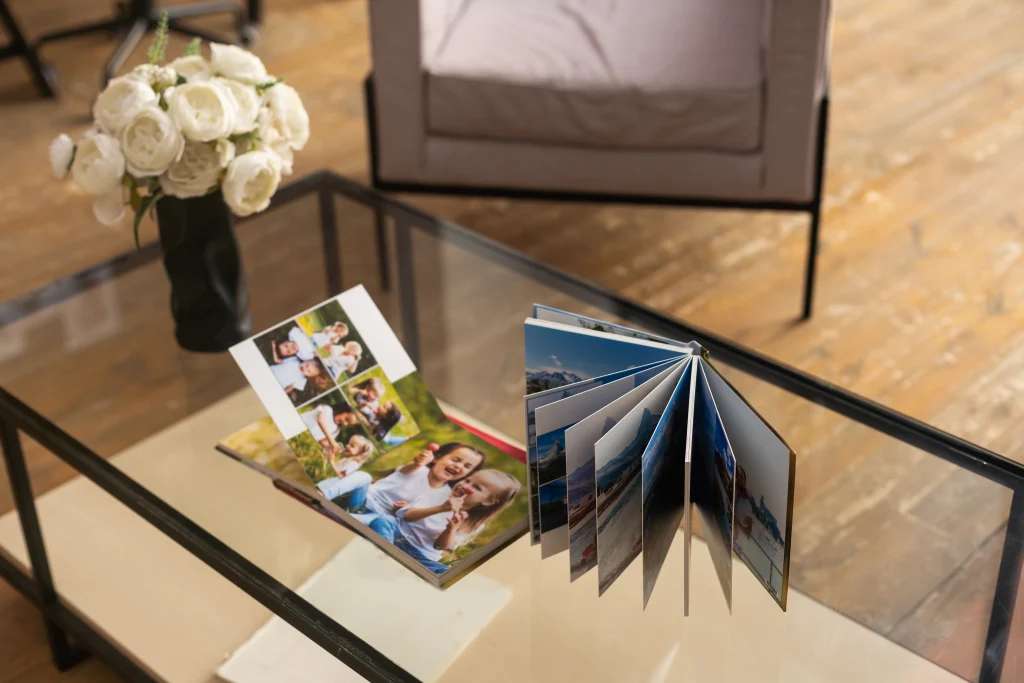
Coffee table book printing comes down to three big decisions: trim size, paper weight, and cover finish. When those choices work together, your book feels substantial in the hand, your photos look rich and sharp, and people pick it up off the table. When they don’t, even beautiful photography can look flat, feel flimsy, or cost far more to produce than it should.
If you have ever opened a proof of your photo book and felt let down, you are not alone. Many photographers, artists, and brands choose a size that looks good on screen, pick paper by weight alone, and add finishes at the last minute. The finished book rarely matches what they pictured.
In this guide, the PRC Book Printing team shares what we have learned from 30+ years of combined experience printing coffee table books on Heidelberg offset presses. You will learn why these problems happen and how to choose specs that make your book look and feel like it came from a major publisher.
What You’ll Learn
- Why Coffee Table Books Often Fall Short
- The Real Causes Behind a Disappointing Coffee Table Book
- How to Check Your Specs Before You Print
- Solution Options for Coffee Table Book Printing
- Why Authors Nationwide Choose PRC Book Printing
- Frequently Asked Questions About Coffee Table Book Printing
- Next Steps
Why Coffee Table Books Often Fall Short
A coffee table book is meant to be displayed, handled, and shared. That makes it one of the least forgiving book types to print. Readers judge it by weight, feel, and image quality before they read a single caption.
Common signs a coffee table book missed the mark:
- Photos look dull or muddy, especially in shadows and skin tones
- Images from the next page show through the paper
- The book feels light or bendy for its size
- The spine cracks or pages loosen after a few openings
- The cover scuffs, fingerprints, or curls within weeks
- Photos disappear into the gutter where the pages meet
- The final cost per book is much higher than planned
Photographers, artists, museums, real estate firms, and brands all run into these issues. The cost is real. A coffee table book is often a gift, a portfolio, or a brand statement, so a weak result reflects directly on you.
The Real Causes Behind a Disappointing Coffee Table Book
In our experience, most problems trace back to specs chosen one at a time instead of as a system. Here is what is really going on.
Cause 1: The Trim Size Ignores Press Sheets and Content
Offset presses print on large sheets that are folded into groups of pages called signatures. Some trim sizes fit those sheets efficiently. Others leave large strips of paper that get trimmed off and thrown away, and you pay for that waste.
Trim size also has to fit your content. Landscape photos lose impact in a portrait book. Square books work well for mixed orientations. Very large formats look dramatic, but they add weight, raise paper costs, and may not fit on retail shelves or in standard mailers.
Cause 2: Paper Was Chosen by Weight Alone
Many authors ask for “heavy paper” and stop there. Weight matters, but so do coating, opacity, and shade. A heavy uncoated sheet absorbs ink and softens photos. A thin gloss sheet makes colors pop but can show images from the back side. The right paper balances all of these factors for your specific images.
Cause 3: The Binding Doesn’t Match the Book
A thick book on heavy coated paper puts real stress on the spine. Glued bindings can struggle to hold heavy coated pages over time. Coffee table books almost always perform best as hardcovers with Smyth sewn text blocks, which let the book open wider and hold up to years of handling.
Cause 4: Finishes Were an Afterthought
Cover finishes do more than decorate. Lamination protects against scuffs and moisture. Soft-touch adds a premium feel but shows fingerprints differently than gloss. Foil and embossing need to be planned in the design file, not added later. When finishes are picked at the end, they often clash with the design or add cost without adding impact.
How to Check Your Specs Before You Print
Use this quick checklist before you request quotes:
- Look at your image mix. Count how many photos are landscape, portrait, or square. Pick a trim size that suits most of them.
- Check image resolution. Photos should be 300 dpi at their final printed size. Full-page and two-page spreads need the most attention.
- Review your gutter. Keep faces, text, and key details away from the center of two-page spreads.
- Estimate page count. Offset books print in signatures, so page counts in multiples of 8 or 16 are usually most efficient.
- Hold a sample. Compare published coffee table books you admire and note their size, paper feel, and cover finish.
- Set a budget per copy. Knowing your target helps your printer recommend where to spend and where to save.
If you are unsure about resolution, color setup, or gutter placement, that is the point to bring in a professional printer before files are final.
Solution Options for Coffee Table Book Printing
Choosing the Right Trim Size
These sizes are popular for coffee table book printing and work well on offset presses:
| Trim Size | Orientation | Best For |
|---|---|---|
| 12 x 12 in. | Square | Art, design, mixed photo orientations |
| 11 x 8.5 in. | Landscape | Landscape, travel, architecture photography |
| 10 x 8 in. | Landscape | Smaller portfolios and gift books |
| 9 x 12 in. | Portrait | Fashion, portraits, fine art |
| 8.5 x 11 in. | Portrait | Corporate, brand, and anniversary books |
Custom sizes are available too. We can check how a custom size fits on press and show you what a small adjustment could save.
Choosing Paper Weight and Coating
For most coffee table books, we recommend a coated text stock in the range of 100# text (about 148 gsm) to roughly 157 gsm. This weight feels substantial and keeps show-through low on image-heavy pages.
- Gloss: Brightest colors and deepest blacks. Best for vivid photography.
- Matte or silk: Softer look with less glare. Popular for art books and books with more text.
- Uncoated: Warm and natural, but photos lose contrast. Best reserved for text-heavy or specialty books.
Heavier paper adds spine thickness and weight, so we balance feel against page count and handling.
Choosing Cover Finishes That Impress
Most coffee table books are hardcover, with two main cover styles:
- Printed case cover: Your design printed and wrapped around the boards, finished with gloss, matte, or soft-touch lamination.
- Cloth or leatherette cover with a dust jacket: A classic, gallery-style look. The cloth cover often carries a foil-stamped title or a debossed logo.
Premium options include foil stamping, embossing and debossing, spot UV, and Scodix enhancements for raised texture and shine. We suggest choosing one or two that support your design instead of stacking every option.
What You Can Do Yourself
You can handle a lot of prep on your own. Set up files in CMYK, confirm image resolution, keep critical content out of the gutter and away from the trim, and add 1/8 inch of bleed on every edge. Avoid converting colors at the last minute or upscaling low-resolution images, since both can hurt print quality.
When to Work With a Professional Offset Printer
Once you move past a handful of copies, offset printing makes sense. At PRC Book Printing, our pre-press team reviews every file, flags issues in plain language, and provides a digital proof before production. Your book is printed on Heidelberg presses with 4 to 6 color capability, so every copy in your run matches. Hardcover coffee table books start at 500 to 1,000 copies. Domestic hardcover production typically takes 4 to 6 weeks after proof approval, and offshore production takes 9 to 13 weeks, which can lower costs on full-color projects.
Why Authors Nationwide Choose PRC Book Printing
PRC Book Printing is a family-owned offset book printer based in Hatboro, Pennsylvania, established in 2012 with a manufacturing legacy dating back to the 1960s. As a regional sales office for one of the largest offset book manufacturers in the United States, we give photographers, artists, publishers, and businesses access to high-end production with personal service.
- 30+ years of combined experience in printing and publishing
- Heidelberg offset presses for accurate, consistent color
- Domestic and offshore options to fit your budget and timeline
- All-inclusive pricing with pre-press, proofing, printing, binding, packaging, and free continental US shipping included
- Personal guidance from owner Jacob Hope and Sales and Production Manager Heather Kustra
- Quality inspection before every shipment
Frequently Asked Questions About Coffee Table Book Printing
How much does coffee table book printing cost?
Cost depends on trim size, page count, paper, cover finishes, quantity, and whether you print domestically or offshore. Larger runs lower the cost per book. PRC Book Printing provides free, all-inclusive quotes that cover pre-press, proofing, printing, binding, packaging, and shipping to any continental US address, so there are no surprise fees.
What is the minimum order for a coffee table book?
Most coffee table books are printed as hardcovers, and PRC Book Printing’s hardcover minimums start at 500 to 1,000 copies. This makes offset quality accessible to photographers, artists, and small publishers who do not need thousands of copies. Contact us with your specs and we can recommend a quantity that fits your goals.
What is the most popular coffee table book size?
Popular sizes include 12 x 12 inches square, 11 x 8.5 inches landscape, and 9 x 12 inches portrait. The best size depends on your photos. Landscape images suit a landscape format, while mixed orientations work well in a square book. Custom sizes are also available if a standard size does not fit your content.
What paper weight is best for a coffee table book?
For image-heavy books, a coated stock from about 100# text (148 gsm) to 157 gsm works well. It feels substantial, reduces show-through, and reproduces photos with strong color and detail. Gloss gives the most vivid color, while matte or silk reduces glare. We can send paper recommendations based on your images and page count.
Should my coffee table book be hardcover or softcover?
Hardcover is the standard for coffee table books. It protects heavy coated pages, holds its shape on display, and signals quality. Pairing a hardcover with Smyth sewn binding lets the book open wider and last for years. Softcover can work for shorter catalogs or budget-focused projects, but it rarely has the same presence.
How long does it take to print a coffee table book?
Domestic hardcover production typically takes 4 to 6 weeks after proof approval. Offshore production takes 9 to 13 weeks and can reduce costs on full-color books. Plan backward from your launch, event, or holiday date so your books arrive on time. We share clear timelines and updates throughout production.
What cover finishes are available for coffee table books?
PRC Book Printing offers gloss, matte, and soft-touch lamination, cloth and leatherette covers, dust jackets, foil stamping, embossing, debossing, spot UV, die-cutting, and Scodix enhancements. We recommend choosing one or two finishes that support your design. Our team can help you decide which options will make the strongest impression.
Next Steps
- Choose a trim size that fits most of your images
- Pick paper by coating and opacity, not weight alone
- Plan cover finishes as part of your design
- Get a proof and file review before production
Ready to start your coffee table book printing project? Call PRC Book Printing at (888) 659-8320 or email info@prcbookprinting.com for a free, no-obligation quote. We typically respond within 24 hours, Monday through Friday, 9 AM to 5 PM EST, and we serve authors nationwide with free shipping to the continental US.
This article was written by the PRC Book Printing expert team, professional book manufacturers with over 30 years of combined experience in the printing and publishing industry. Based in Hatboro, Pennsylvania, our team operates industry-leading Heidelberg offset presses and has helped thousands of authors, publishers, and businesses nationwide create exceptional printed books, from hardcover novels to children’s board books, cookbooks to coffee table books.
Have questions about your book printing project? Call (888) 659-8320 or email info@prcbookprinting.com for a free, no-obligation quote.