
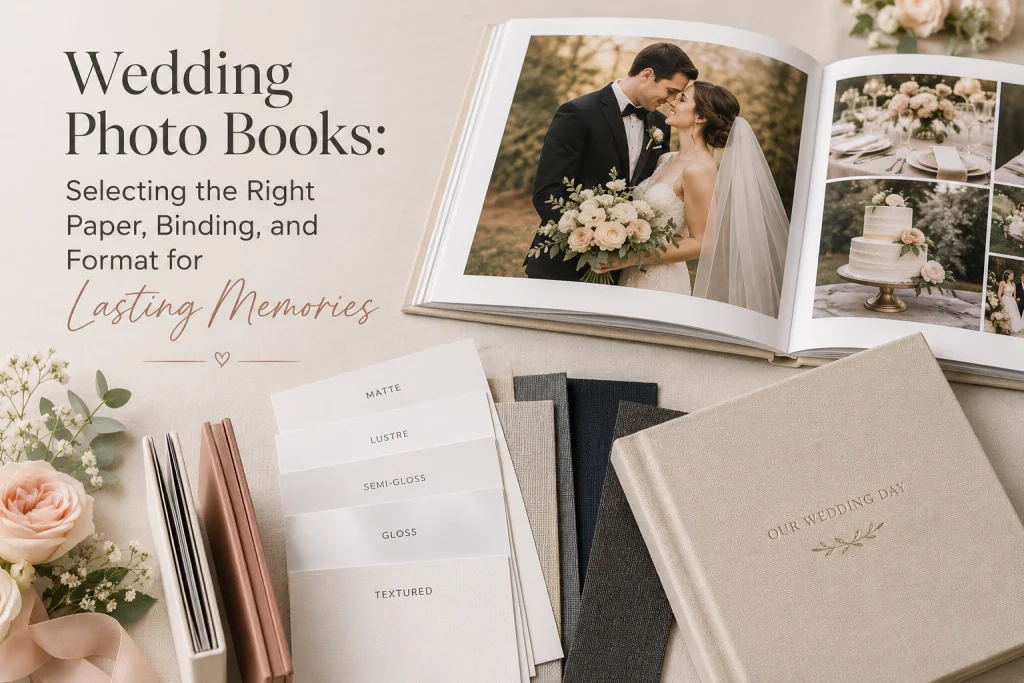
Wedding photo books built for generational preservation require lay-flat binding that showcases panoramic images without gutter loss, acid-free archival paper that prevents yellowing over decades, and professional offset printing that maintains color accuracy indefinitely. The paper choice between lustre, matte, and pearl finishes affects both the visual presentation of your photographs and the book’s long-term durability, while binding selection—particularly Smyth sewn or lay-flat options—determines whether your wedding memories display beautifully across two-page spreads or disappear into the center fold.
Your wedding photographs represent one of the most significant investments of your celebration—often thousands of dollars for professional photography capturing moments that can never be recreated. Yet many couples preserve these irreplaceable images in consumer-grade photo books that yellow, fade, crack, and deteriorate within years rather than generations. The beautiful ceremony kiss, the first dance, the candid laughter with loved ones—these moments deserve printing and binding that honors their significance.
This guide walks you through every decision affecting your wedding photo book’s quality and longevity, from paper stock to binding method to format selection. With over 30 years of combined experience helping couples and wedding photographers nationwide create heirloom-quality albums, the PRC Book Printing team understands what transforms wedding photographs into treasured family artifacts.
What You’ll Learn
- Why Wedding Photo Book Quality Matters for Generations
- The Real Causes Behind Wedding Album Deterioration
- Paper Options for Wedding Photo Books
- Binding Methods: Choosing Lay-Flat vs. Traditional
- Format and Size Considerations
- Premium Finishing Options for Wedding Albums
- Expert Tips from PRC Book Printing
- Frequently Asked Questions
- Next Steps: Create Your Heirloom Wedding Album
Why Wedding Photo Book Quality Matters for Generations
Wedding photo books occupy a unique category among printed materials. Unlike novels read once or reference books consulted occasionally, wedding albums are:
- Displayed prominently in homes for years or decades
- Shared repeatedly with family, friends, and future generations
- Handled emotionally during anniversaries, family gatherings, and milestone moments
- Inherited by children and grandchildren who never witnessed the day
- Irreplaceable once the original photographs are lost or corrupted
This combination of emotional significance, repeated handling, long-term display, and generational inheritance demands printing quality far beyond what consumer photo services provide.
Common wedding photo book failures include:
- Page yellowing visible within 5-10 years
- Color fading, particularly in areas exposed to light
- Binding cracking when albums open flat for viewing
- Pages sticking together from humidity exposure
- Covers warping or lamination peeling
- Images disappearing into tight center gutters
- Overall quality looking dated or cheap compared to the photographs themselves
These failures don’t just disappoint—they represent loss of irreplaceable memories. A faded, cracked wedding album can’t be fixed by reprinting; the emotional artifact of “the original album” is diminished forever.
The Real Causes Behind Wedding Album Deterioration
Understanding why wedding photo books fail helps you make choices that prevent deterioration.
Cause #1: Consumer Photo Services Prioritize Price Over Permanence
Online photo book services—Shutterfly, Mixbook, Artifact Uprising, and similar platforms—create attractive products at accessible price points. Their business models optimize for casual use: vacation albums, annual family recaps, gifts. These services work well for their intended purpose.
Wedding albums require different priorities. Consumer services typically use:
- Digital printing (less color-stable over time than offset)
- Standard adhesive binding (degrades with repeated opening)
- Acidic paper (causes yellowing)
- Basic lamination (can peel in humidity)
- Tight gutters that consume image content
None of these choices are wrong for casual photo books. They’re simply inadequate for wedding albums meant to survive 50-100 years.
Cause #2: Paper Chemistry Causes Progressive Degradation
Standard printing paper contains acid that causes yellowing and brittleness over time. This chemical process is irreversible and progressive—pages that look pristine today become noticeably yellow within a decade, then progressively worse.
Additionally, paper that isn’t designed for archival use absorbs moisture from humidity, causing waviness, warping, and stuck pages. Wedding albums stored in basements, attics, or humid climates deteriorate faster.
Cause #3: Inadequate Binding for Display Use
Wedding albums get opened flat for viewing far more than typical books. Viewers want to see two-page spreads without obstruction. They turn pages slowly, examining details. They leave albums open on coffee tables during gatherings.
Perfect binding—standard adhesive along the spine—resists opening flat. Users crack spines trying to see full spreads, damaging the binding and eventually causing page loss. Even when forced flat, perfect-bound albums show tight gutters that hide image content at the center fold.
Cause #4: Print Quality That Doesn’t Match Photography Quality
Professional wedding photography represents an investment of $2,000-$10,000 or more. These images are captured with high-end equipment, processed with professional software, and edited with careful attention.
Consumer printing can’t reproduce this quality faithfully. Digital printing at consumer price points lacks the color accuracy, consistency, and tonal range that professional photographs deserve. The stunning image your photographer delivered becomes merely adequate in print.
Cause #5: Format Choices That Don’t Serve the Content
Wedding photography includes diverse image types: intimate portraits, sweeping venue shots, detail images, candids, formal groups, and documentary moments. A single format doesn’t serve all these images equally well.
Square formats truncate horizontal images. Small sizes can’t showcase detail work. Portrait orientation wastes space on landscape shots. Format choices made without considering actual image content compromise the presentation of your most important photographs.
Paper Options for Wedding Photo Books
Paper selection affects both visual presentation and long-term preservation. Here’s what you need to know.
Paper Finish Options
Lustre (Satin) Finish: The most popular choice for wedding photography, lustre paper offers:
- Subtle sheen without harsh reflections
- Excellent color saturation and depth
- Fingerprint resistance superior to glossy
- Professional photography studio standard
- Best for: Most wedding albums—balances visual impact with practical durability
Matte Finish: Elegant and understated, matte paper provides:
- No reflections or glare under any lighting
- Soft, sophisticated appearance
- Excellent for fine art and editorial styles
- Slightly lower color saturation than lustre
- Best for: Intimate, romantic, or artistic wedding photography styles
Pearl/Metallic Finish: Distinctive and premium, pearl papers offer:
- Subtle iridescent quality that shifts with viewing angle
- Enhanced depth in highlights and whites
- Dramatic presentation for bold photography
- Higher cost than standard finishes
- Best for: Statement albums, dramatic photography, couples wanting unique presentation
Glossy Finish: Maximum vibrancy with some practical trade-offs:
- Highest color saturation and contrast
- Vibrant, punchy appearance
- Shows fingerprints and reflections readily
- Can stick to facing pages in humidity
- Best for: Vibrant, colorful celebrations; requires careful handling
Paper Weight and Thickness
Standard Photo Paper (80# to 100# text):
- Adequate for most applications
- Some flex and movement
- Lower cost
- Best for: Albums with page protectors or overlays
Heavy Photo Paper (100# to 130# cover):
- Substantial, premium feel
- Greater rigidity and durability
- Better resistance to handling wear
- Best for: High-quality wedding albums without additional page protection
Board-Mounted Pages:
- Photographs mounted to rigid board
- Maximum durability and premium feel
- Heaviest and most substantial option
- Best for: Flush-mount albums, highest-end presentation
Archival Considerations
Acid-Free Paper: Essential for wedding albums. Acid-free paper doesn’t undergo the chemical degradation that causes yellowing. The cost difference is modest; the longevity difference is decades. Accept no substitute for wedding photo books.
Lignin-Free: Lignin is another compound that causes paper degradation. Lignin-free papers offer additional protection beyond acid-free alone.
Archival Certification: Some papers carry specific archival certifications guaranteeing longevity. For maximum preservation, request papers meeting archival standards.
Binding Methods: Choosing Lay-Flat vs. Traditional
Binding determines whether your wedding photographs display beautifully or disappear into the gutter.
Lay-Flat Binding Options
Smyth Sewn Hardcover: Thread-sewn signatures bound into rigid hardcover case:
- Opens nearly flat with minimal gutter loss
- Extremely durable—lasts generations
- Premium, bookstore-quality presentation
- Professional appearance suitable for display
- Best for: Gift-quality wedding albums combining presentation with functionality
Lay-Flat (Panoramic) Binding: Specialized construction allowing pages to open completely flat:
- Zero gutter loss—images span seamlessly across spreads
- Pages lay perfectly flat without holding
- Ideal for panoramic images and two-page designs
- Premium option with higher cost
- Best for: Albums designed specifically for panoramic spreads and maximum visual impact
Accordion/Leporello Binding: Continuous folded pages creating seamless spreads:
- Truly seamless images across any number of pages
- Unique, artistic presentation
- Displays as continuous panorama or individual pages
- Distinctive alternative to traditional albums
- Best for: Artistic presentations, unique formats, statement pieces
Traditional Binding (Not Recommended for Wedding Albums)
Perfect Binding: Adhesive along trimmed spine edge:
- Does not open flat
- Tight gutters consume image content
- Binding degrades with repeated opening
- Spine can crack with forceful flat opening
- Not recommended for wedding photo books
Case Binding (Standard): Pages glued to cover case without sewn signatures:
- Better than perfect binding but not ideal
- Some gutter loss on spread images
- Less durable than Smyth sewn
- Not recommended for premium wedding albums
Why Lay-Flat Matters for Weddings
Wedding photography is designed for spreads. Panoramic ceremony shots, sweeping reception images, carefully composed two-page layouts—these depend on seamless viewing across the center fold.
With tight-gutter binding:
- Faces disappear into the fold at the worst moment
- Carefully composed images appear cropped
- Panoramic impact is lost
- Viewers must crack spines to see content
With lay-flat binding:
- Every pixel displays as intended
- Panoramic images create dramatic impact
- Viewing experience matches design intent
- Albums survive repeated opening without damage
Format and Size Considerations
Format and size affect both presentation impact and practical usability.
Popular Wedding Album Sizes
10″ × 10″ Square:
- Classic wedding album format
- Works well with diverse image orientations
- Compact enough for comfortable handling
- Large enough for impactful photos
- Best for: Most wedding albums—versatile and elegant
12″ × 12″ Square:
- Larger format for maximum photo impact
- Dramatic presentation for statement albums
- Requires more storage space
- Heavier for handling
- Best for: Showcase albums, image-focused designs, couples prioritizing visual impact
11″ × 14″ or 10″ × 13″ Landscape:
- Ideal for horizontal/landscape images
- Dramatic spread potential
- Accommodates ceremony panoramas beautifully
- Larger footprint for display and storage
- Best for: Documentary-style coverage with many horizontal images
8.5″ × 11″ Portrait:
- Traditional book orientation
- More compact and handleable
- Better for vertical portrait images
- More limited spread potential
- Best for: Parent albums, smaller keepsake versions
8″ × 10″ Portrait or Landscape:
- Classic photography proportions
- Compact and practical
- Economical production
- Best for: Parent albums, guest books, additional copies
Choosing the Right Size
Consider your actual image content:
- Mostly horizontal images: Landscape format showcases them best
- Mix of orientations: Square format accommodates both
- Dramatic statement priority: Larger sizes (12″ × 12″ or larger)
- Practical handling priority: Moderate sizes (10″ × 10″ or smaller)
- Budget considerations: Smaller sizes reduce cost
Consider intended use:
- Coffee table display: Larger formats make statements
- Frequent handling: Moderate sizes are more comfortable
- Shelf storage: Consider height and depth requirements
- Travel/sharing: Smaller sizes transport more easily
Premium Finishing Options for Wedding Albums
Finishing choices elevate wedding albums from printed books to treasured heirlooms.
Cover Options
Printed Hardcover with Lamination:
- Custom printed cover featuring wedding photographs
- Matte, gloss, or soft-touch lamination options
- Full creative control over cover design
- Most popular option for customized presentation
- Best for: Personalized albums featuring cover photos
Photo Window Cover:
- Printed cover with cutout window displaying interior photo
- Combines fabric/leather beauty with photo personalization
- Elegant presentation option
- Best for: Classic elegance with personal touch
Linen or Fabric Cover:
- Premium textile covering over rigid boards
- Available in various colors and textures
- Sophisticated, timeless appearance
- Can include foil stamping for personalization
- Best for: Classic, elegant presentation
Leather or Leatherette Cover:
- Luxurious look and feel
- Excellent durability
- Available in various colors
- Can include embossing or foil stamping
- Best for: Premium heirloom albums
Silk or Velvet Cover:
- Ultimate luxury presentation
- Distinctive tactile experience
- Statement piece for display
- Requires careful handling
- Best for: Highest-end presentation
Personalization Options
Foil Stamping:
- Metallic text or designs on cover
- Names, dates, monograms
- Gold, silver, copper, or colored foils
- Elegant personalization
- Best for: Adding names and dates to fabric or leather covers
Embossing/Debossing:
- Raised or recessed designs without ink
- Subtle, sophisticated effect
- Often combined with foil stamping
- Best for: Monograms, patterns, elegant personalization
Custom Die-Cutting:
- Unique cover shapes or windows
- Distinctive presentation
- Higher complexity and cost
- Best for: Truly unique album designs
Interior Enhancements
Gilded Page Edges:
- Gold, silver, or colored edge treatment
- Premium presentation detail
- Distinctive appearance
- Best for: Ultimate luxury albums
Ribbon Page Markers:
- Satin ribbon bookmark
- Practical and elegant
- Available in various colors
- Best for: Functional elegance
Protective Tissue Interleaves:
- Translucent sheets between pages
- Prevents image contact
- Classic album tradition
- Best for: Traditional presentation, glossy paper
Presentation Box:
- Custom box for album storage
- Protection during storage
- Gift-worthy presentation
- Best for: Album gifts, premium protection
Expert Tips from PRC Book Printing
Our team has produced wedding albums for photographers and couples nationwide. Here’s what creates truly exceptional results.
Match Paper to Photography Style
Work with your photographer to select paper that complements their editing style. Moody, cinematic edits often shine on matte paper. Bright, vibrant styles may prefer lustre or pearl. The same photograph looks meaningfully different on different papers—choose intentionally.
Design for the Gutter
Even with lay-flat binding, design with awareness of the center fold. Place critical elements—especially faces—away from the precise center. This ensures perfect presentation regardless of binding slight variations and viewer handling.
Consider Parent Album Strategy
Many couples order smaller parent albums alongside their main album. Design these intentionally rather than simply shrinking the main album. A thoughtfully curated 40-page parent album often delights more than a compressed 80-page version.
Don’t Underestimate Cover Impact
The cover creates the first impression for every viewing over the album’s entire life. A premium cover material with thoughtful personalization transforms the experience from “opening a book” to “opening a treasure.” This investment pays dividends with every touch.
Order Your Album Sooner Rather Than Later
Wedding albums become more precious with time—but they’re also created more easily while memories are fresh and enthusiasm is high. Couples who delay often never complete their albums. Set a deadline, perhaps your first anniversary, and honor it.
Frequently Asked Questions
What paper is best for wedding photo books?
Lustre (satin) finish on acid-free, archival-quality paper is the most popular choice for wedding albums. Lustre provides excellent color saturation without harsh reflections, resists fingerprints, and suits most photography styles. Matte paper works well for artistic or intimate styles, while pearl/metallic creates dramatic impact for bold photography.
What binding is best for wedding albums?
Lay-flat or Smyth sewn binding is essential for wedding photo books. These methods allow pages to open flat or nearly flat, displaying two-page spreads without gutter loss. Standard perfect binding is not recommended because it doesn’t open flat and can damage with repeated viewing.
How long do professional wedding albums last?
Professionally printed wedding albums using acid-free paper, archival inks, and quality binding can last 100+ years with reasonable care. Consumer-grade photo books typically show noticeable deterioration within 10-20 years. The difference in longevity justifies the investment in professional quality for irreplaceable wedding memories.
What size is best for a wedding album?
10″ × 10″ square is the most versatile and popular wedding album size, accommodating diverse image orientations while remaining handleable. 12″ × 12″ provides more dramatic impact for showcase albums. Consider your photography content—landscape-heavy coverage may benefit from landscape formats.
How many pages should a wedding album have?
Most wedding albums range from 40-80 pages (20-40 spreads). Quality over quantity matters—a 40-page album with carefully curated images and thoughtful design creates better experience than an 80-page album cramming in every photograph. Work with your photographer to identify the images that tell your story best.
What’s the difference between professional and consumer wedding albums?
Professional albums use archival-quality materials (acid-free paper, quality inks), superior binding (lay-flat or Smyth sewn), offset printing for color accuracy, and premium finishing options. Consumer services use standard materials optimized for price rather than permanence. The differences become increasingly apparent over years of ownership.
Should I get a printed cover or fabric cover?
Both are excellent choices. Printed covers featuring your photographs create personalized impact and showcase your images immediately. Fabric covers (linen, leather) with foil stamping offer classic elegance and premium feel. Consider which presentation style matches your aesthetic and home décor.
How do I protect my wedding album long-term?
Store albums horizontally (not upright) in climate-controlled environments away from direct sunlight. Avoid basements, attics, and areas with humidity fluctuations. Handle with clean, dry hands. Consider a presentation box for storage protection between viewings.
Can wedding photographers order albums through PRC Book Printing?
Absolutely. PRC Book Printing works with professional photographers nationwide, offering professional pricing, consistent quality, and reliable service for client albums. Our Heidelberg offset printing delivers the color accuracy professional photography demands.
How much do professional wedding albums cost?
Professional wedding albums typically range from $300-$1,500+ depending on size, page count, binding method, cover materials, and finishing options. While higher than consumer alternatives, the quality, durability, and presentation justify the investment for irreplaceable wedding memories. Contact PRC Book Printing for specific quotes.
How long does wedding album printing take?
Domestic offset printing requires 2-5 weeks from proof approval for delivery. Build additional time for design review and proofing before production. Rush services are available when timelines are tight, though planning ahead ensures best results without rush fees.
What resolution do wedding photos need for album printing?
300 DPI at final print size is the minimum requirement. Most professional wedding photographers deliver images at adequate resolution. For a 10″ × 10″ album, images spanning full spreads need at least 6000 × 3000 pixels for full-spread images. Verify resolution before finalizing layouts.
Next Steps: Create Your Heirloom Wedding Album
Your wedding photographs deserve printing that honors their significance—not just for today, but for every anniversary, family gathering, and generation that follows.
Key Takeaways:
- Lay-flat or Smyth sewn binding prevents gutter loss and survives repeated viewing
- Acid-free, archival paper prevents yellowing over decades
- Lustre finish provides the best balance of visual impact and durability for most albums
- Professional offset printing maintains color accuracy your photographs deserve
- Premium covers and finishing transform albums into treasured heirlooms
Ready to Create Your Wedding Album?
Contact PRC Book Printing for a free, no-obligation quote on your wedding photo book project. Our team will help you select paper, binding, and finishing options that create an album worthy of your most precious memories.
Phone: (888) 659-8320 Email: info@prcbookprinting.com Hours: Monday–Friday, 9:00 AM – 5:00 PM EST
From our Hatboro, Pennsylvania office, PRC Book Printing serves couples and wedding photographers nationwide with professional offset printing on Heidelberg presses. Our all-inclusive pricing covers pre-press file review, proofing, printing, binding, and free shipping to all continental US addresses—no hidden fees, no surprise charges.
Create a wedding album your grandchildren will treasure.
Written by the PRC Book Printing expert team, professional book manufacturers with over 30 years of combined experience in the printing and publishing industry. Based in Hatboro, Pennsylvania, our team operates industry-leading Heidelberg offset presses and has helped thousands of authors, publishers, and businesses nationwide create exceptional printed books—from hardcover novels to children’s board books, cookbooks to coffee table books.